In a quote for printing, textiles, or packaging, two types of costs often appear that are not directly related to "material" or "number of items": setup costs and tooling costs. They seem similar because they are both preparation costs, but they function differently and have a different impact on repeat orders.
What are setup costs?
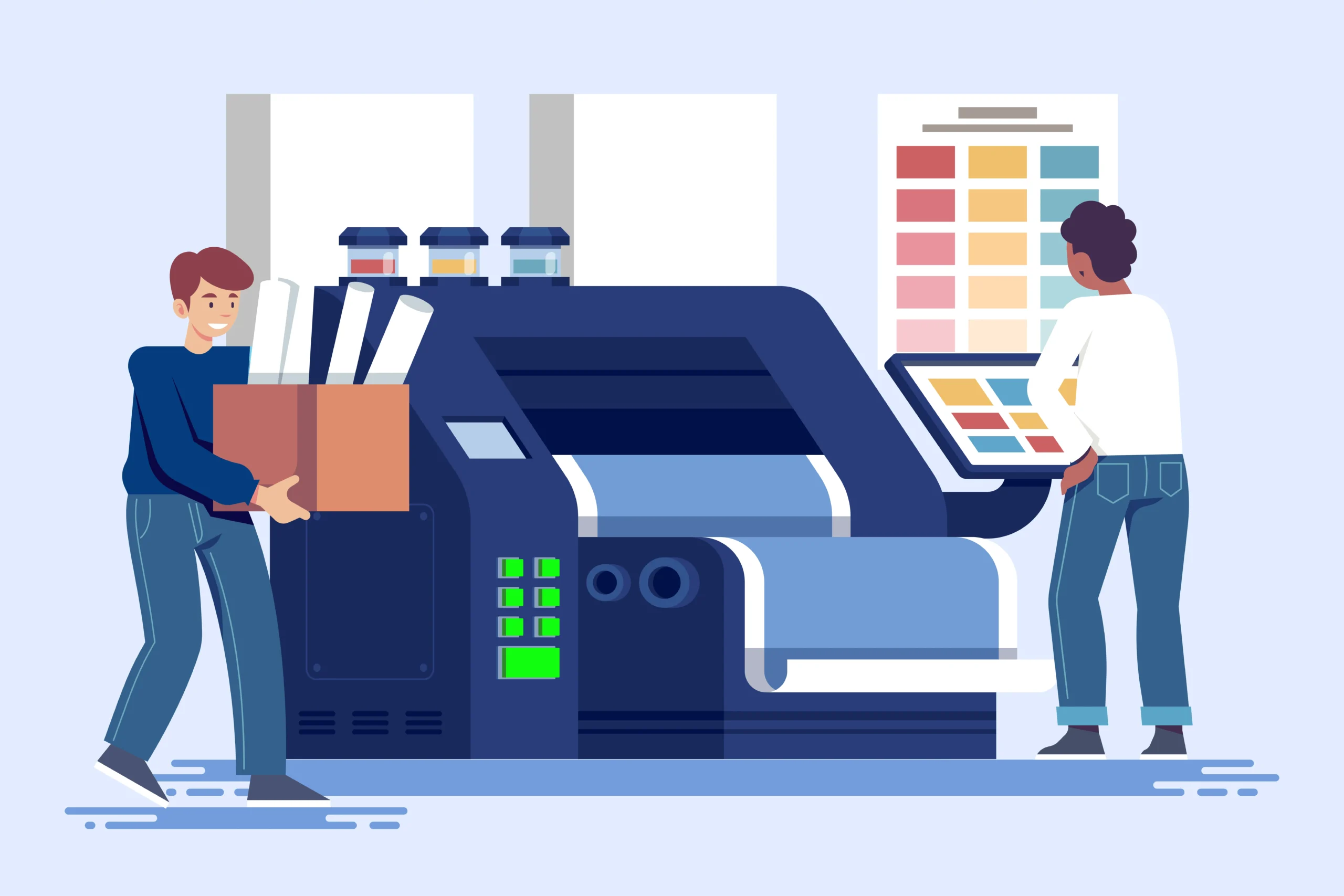
Setup costs are the costs involved in preparing a production run to ensure it starts correctly. This includes file preparation, machine settings, positioning, testing, and—depending on the technique—creating specific carriers or configurations per color or print location.
For clothing and textiles, this can depend on how many positions you want to print and how many colors your design contains, depending on the chosen printing technique. We work with methods like transfer printing, embroidery, screen printing, and DTF, and it is precisely that technique that determines what exactly needs to be "set up."
This also applies to print work. Before the first copy rolls off the press, files must be correctly formatted, cut lines and finishing details must be aligned, and the production flow must be set up.
What are tooling costs?
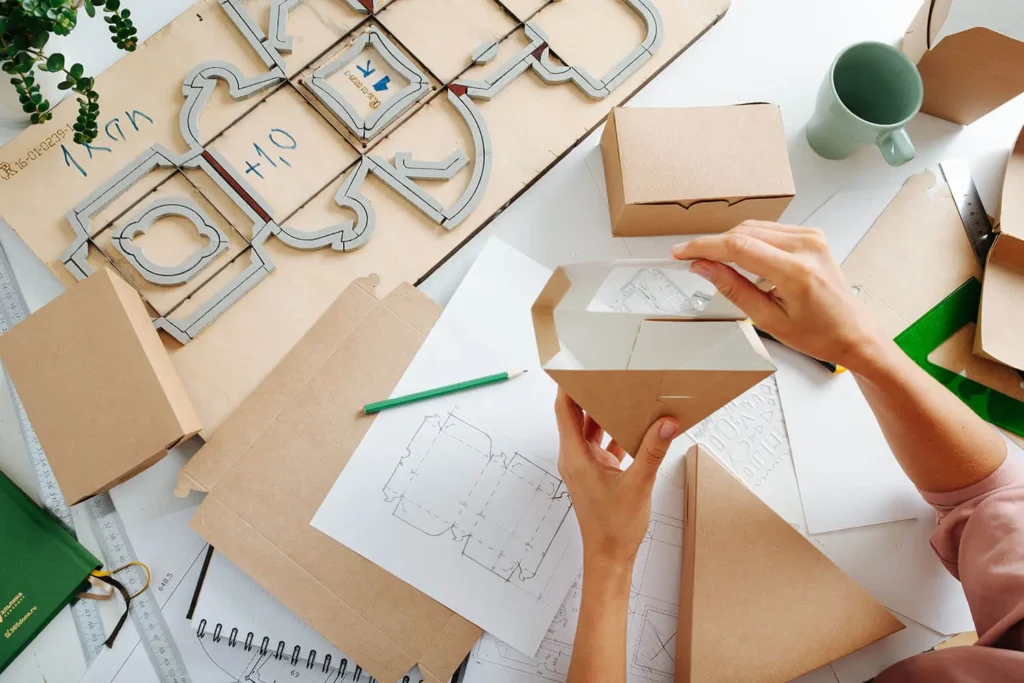
Tooling costs are the costs for creating a physical mold or tool required to produce a product. The most classic example in packaging is a die-cutter for punching out packaging boxes. You typically pay for this "tool" only once. As soon as it exists, the cost per unit decreases for repeat productions because the die-cutter does not need to be remade.
Stel: Je bestelt 100 doosjes en de vormkosten zijn €200. Dat betekent dus €2 per doosje extra. Bestel je er 1000, dan is dat nog maar €0,20 per doosje. Bij een herdruk betaal je die hele €200 niet meer.
The difference at a glance
Kosttype
What are you paying for?
When do you pay again?
Impact on repeat orders
Setup costs
Production setup and correct configuration
Usually for every production run, per design, or per modification
Usually recurs, sometimes lower for repeat orders
Tooling costs
Creating a physical tool, such as a die-cutter
Usually only repeated if the design or tool changes
Major advantage for repeat orders
Examples of what we create and produce
Textile printing and personalization
Suppose you want a logo on the chest and a large print on the back of a t-shirt. This counts as two print locations. In many cases, this means positioning the garment twice, with separate preparation and setup for each. If the design also features multiple colors, the preparation time may increase further, depending on the technique used.
With embroidery, you often see a setup cost because the design file must be converted into stitches, after which the machine is calibrated for the specific thread, fabric, and positioning.
Printed materials such as stickers, posters, and folders
With digital production, setup costs are often more limited, but they almost always exist in some form: checking files, ensuring the correct format, bleed, cut lines, finishing, and potential test prints. For more complex finishes or multiple versions, these preparations increase accordingly.
Packaging and custom boxes
This is where setup costs and tooling costs often come together.
- Setup costs: preparing files for production, technical construction, and alignment with material and finishing
- Tooling costs: a die-cutter to punch out the packaging
As a result, the total price may appear higher for the initial production run. However, for a second run, those tooling costs are largely eliminated, allowing you to achieve a lower cost per unit much faster.
Why this matters for your budget and planning
Setup costs often explain why a small run can seem relatively expensive per unit. This is because you pay a fixed preparation fee, regardless of whether you produce 20 or 200 items. As the order volume increases, this fixed cost is spread out, causing the price per unit to decrease.
Tooling costs, on the other hand, are typically an investment. If you know that your packaging or box will be reordered, a cutting die is especially advantageous because the tooling is already available for future production runs.
Smart choices to help manage your costs
- Consolidate as much as possible into a single design version where feasible.
- Limit the number of print locations on textiles when they are not essential.
- Plan ahead with packaging: if the dimensions remain consistent, the investment in a cutting die pays off much faster.
- Communicate early in the process about order volumes and potential reorders; this allows us to better align the production technique with your needs.
Conclusion
Setup costs relate to the production start-up. Tooling costs involve creating the physical tools required to shape the product. In practice, these often go hand-in-hand in projects involving textiles, printing, and packaging, exactly the fields where LX Concept provides both creation and production services.
Twijfel je of jouw ontwerp voordeliger is met digitale druk of offset/stansing? Stuur ons je ontwerp en we rekenen beide opties voor je uit.